
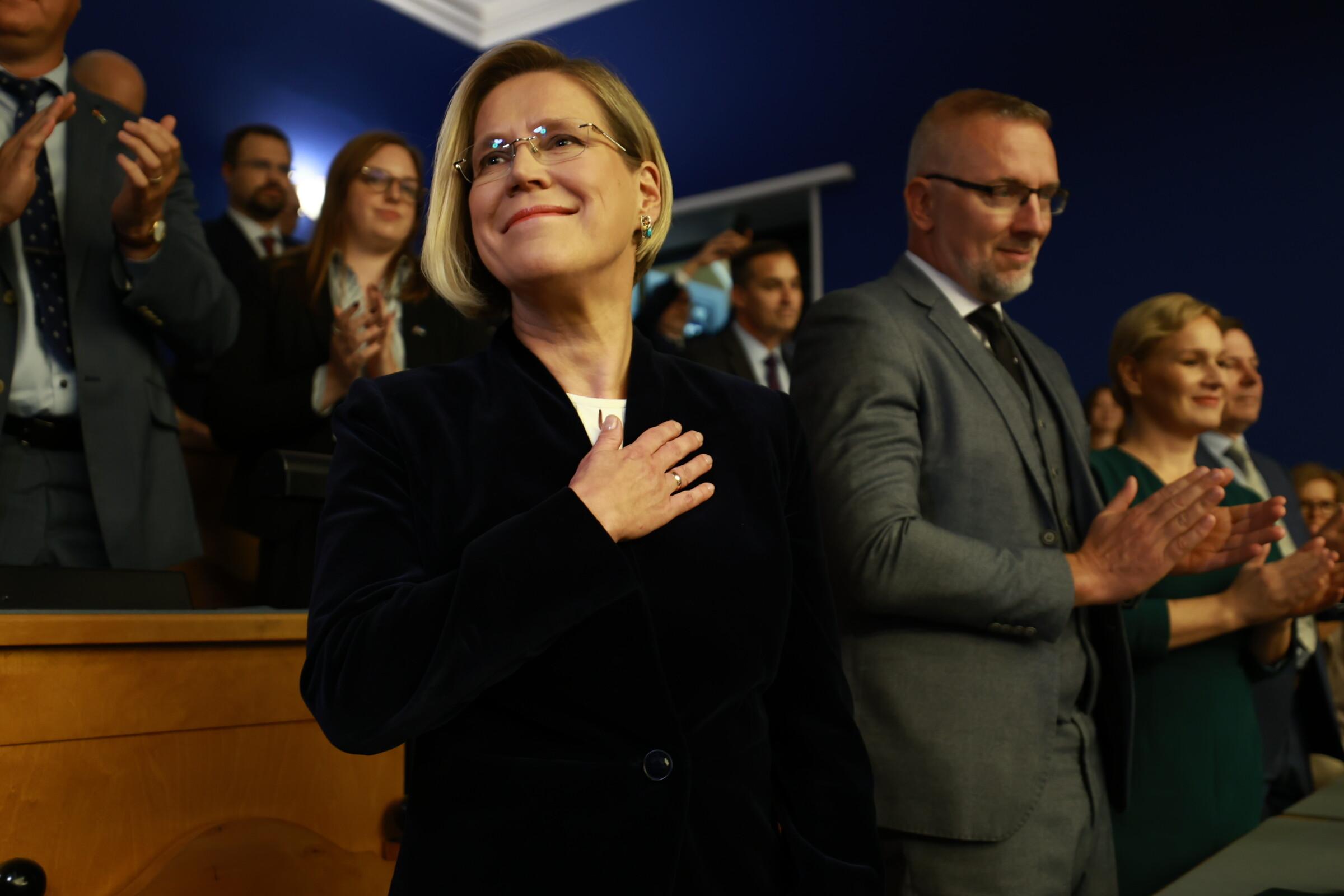
TALLINN, Estonia — Estonia’s parliament elected Ülle Madise as the country’s next president on 2 September, making the constitutional lawyer the second woman to hold the office.
Madise, 51, received 71 votes in the 101-seat Riigikogu, clearing the two-thirds threshold of 68 in the first round. She was the only candidate after no alternative secured the required parliamentary nominations.
She will succeed Alar Karis for a five-year term. Karis chose not to seek another term, according to Reuters. Madise currently serves as Estonia’s Chancellor of Justice, an independent constitutional office that also performs ombudsman functions.
The presidency is largely ceremonial, but it is not irrelevant. Estonia’s head of state promulgates laws, can return legislation to parliament, nominates certain senior officials and represents the country abroad. The president can also shape public debate through speeches and constitutional interpretation.
Madise’s professional background gives her unusual authority in those functions. She has spent years examining whether public power complies with the constitution and whether people can obtain remedies when institutions fail them.
That experience will be tested in a country confronting both security pressure and democratic trade-offs. Estonia borders Russia, strongly supports Ukraine and has allocated 5.4% of gross domestic product to defence this year, Reuters reported.
National-security policy can create pressure for surveillance, information controls and expedited decision-making. A president trained in constitutional limits should insist that urgency does not remove proportionality, judicial review or the rights of linguistic and political minorities.
Her election is also a representation milestone. Kersti Kaljulaid became Estonia’s first woman president in 2016. A second woman in the office makes female leadership less exceptional, but it does not by itself establish equality across government, business or local authority.
The unopposed ballot deserves scrutiny as well as celebration. Madise obtained a clear supermajority, yet voters did not choose directly and parliament did not compare competing programmes in the final round. She will need to demonstrate independence from the coalition that assembled her nomination.
Madise’s leadership should be measured through decisions: which laws she challenges, how transparently she explains appointments and whether her human-rights experience remains visible when national security dominates politics.
Estonia has elevated a woman whose career was built around holding government to legal standards. The presidency will test whether she can apply that discipline from inside the state’s most symbolic office.



Join the discussion