
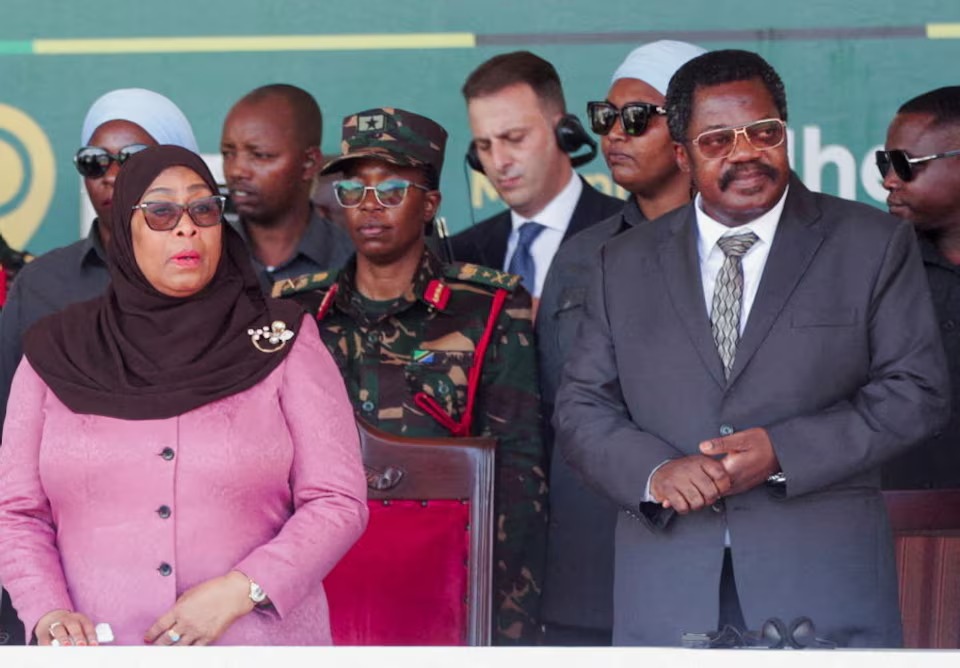
DODOMA, Tanzania — Tanzania’s ruling Chama Cha Mapinduzi party has selected Energy Minister Deogratius Ndejembi as its nominee for vice-president after Emmanuel Nchimbi announced his resignation less than a year into the role.
Party secretary-general Asha-Rose Migiro announced the nomination on 27 August. Nchimbi’s resignation takes effect on 4 September.
President Samia Suluhu Hassan accepted the resignation without publicly providing a detailed explanation. Nchimbi had recently attracted criticism within the ruling party after speaking about constitutional reform and the need for governance that protects dignity as well as material development.
Hassan became Tanzania’s first woman president in 2021 after the death of John Magufuli. Her accession represented a historic political milestone and initially drew attention to a change in tone from her predecessor’s administration.
Representation, however, cannot replace accountability. Hassan was re-elected in 2025 in an election from which major opposition candidates were excluded. Protests were met with a violent security response, and a government-appointed inquiry later reported at least 518 deaths, while warning that the true number could be higher.
Opposition leader Tundu Lissu remains imprisoned on treason charges that he disputes. These conditions make a sudden change in the vice-presidency more than an internal personnel matter.
Nchimbi’s departure and reported disagreement with Hassan raise questions about whether debate over constitutional reform can take place safely inside the governing party. The government should disclose the constitutional process, parliamentary timetable and reasons for selecting Ndejembi.
Hassan’s gender has produced conflicting expectations. Women leaders are sometimes judged more harshly than men or treated as symbols responsible for advancing every woman. She should instead be evaluated by the same substantive standards applied to any president: protection of life, competitive elections, freedom of opposition, transparent appointments and respect for law.
Her position also demonstrates the limits of “first woman” narratives. A woman reaching the presidency can expand political possibility while still leading institutions that require scrutiny.
The vice-presidential transition is therefore a leadership test for Hassan and Tanzania’s governing system. A stable handover is not enough. Citizens need evidence that senior officials can disagree, resign and be replaced through transparent constitutional processes—without political criticism becoming a threat to personal freedom.



Join the discussion